
There are 15 days between Juneteenth and July 4th. There are also 89 years — the years that separate the date of our country’s declaration of freedom and the date when the last enslaved person was informed of their emancipation from forced servitude.
What does it mean to be truly free in a country where personal liberty has so long been dependent on one’s skin color, gender, or wealth? Is the meaning of freedom limited only to freedom from tyranny, poverty, fear, and deprivation? Or does it also include freedom to work, create, and speak one’s truth?
Philosophers, economists, and politicians have argued about these questions for centuries, and wars have been fought over which freedoms society and government should defend. But wherever you fall on the ideological spectrum, the U.S. Constitution safeguards space for you to lawfully advance your cause alongside your fellow citizens, free of government interference or corporate control. That space is called the independent sector.
In the United States, the independent sector has been a sanctuary for Americans to exercise their individual freedoms and defend the freedoms of others. Long before the ink was dry on the Declaration of Independence, Americans were joining together in their communities to address public issues and promote common causes. Over our nation’s 250-year history, charitable nonprofit organizations have had a role in every societal shift, innovation, and breakthrough — from the abolitionist and civil rights movements to the eradication of polio. When the American people are ready for change, it is through the independent sector that they act first.
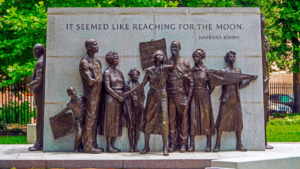
A photo of the Virginia Civil Rights Memorial in Richmond.
It can’t be denied that the freedoms of association, assembly, and speech that form the foundation of the independent sector are currently being challenged. In this period of political turbulence — and amid broader debates about our nation’s values — charitable organizations often find themselves caught in the crosscurrents of a government more willing to constrain the independence and civic participation of those whose views or activities it opposes. To many of us, this may feel unprecedented — but in fact, it was the existence of threats like those we face today that inspired the creation of our distinctly American independent civic space. We were built for this moment.
Over the past 250 years, there have been many times when our nation has fallen short of its promise to protect and defend the freedoms of its people. It is in those gaps between aspiration and reality that the millions of organizations that make up the independent sector have stepped up: fighting for equal rights, providing food and housing to those in need, and spurring scientific and cultural innovations. In a country with freedom as its underlying principle, charitable organizations are on the frontlines. We are often the first to act to defend and preserve Americans’ rights and freedoms, and the first target for those wishing to suppress those freedoms.
Later this year, Independent Sector will be releasing recommendations, governance strategies, and best practices from our Panel on Sector Independence to guide nonprofit organizations in safeguarding their independence. But as history shows us, working to preserve the independence of the charitable nonprofit sector is not just an exercise of self-preservation — it is an act of patriotism. We owe it to our missions, our communities, and our fellow Americans to safeguard our independence from undue influence as fiercely as our founders did 250 years ago.
Dr. Akilah Watkins
Dr. Akilah Watkins is president and CEO of Independent Sector.