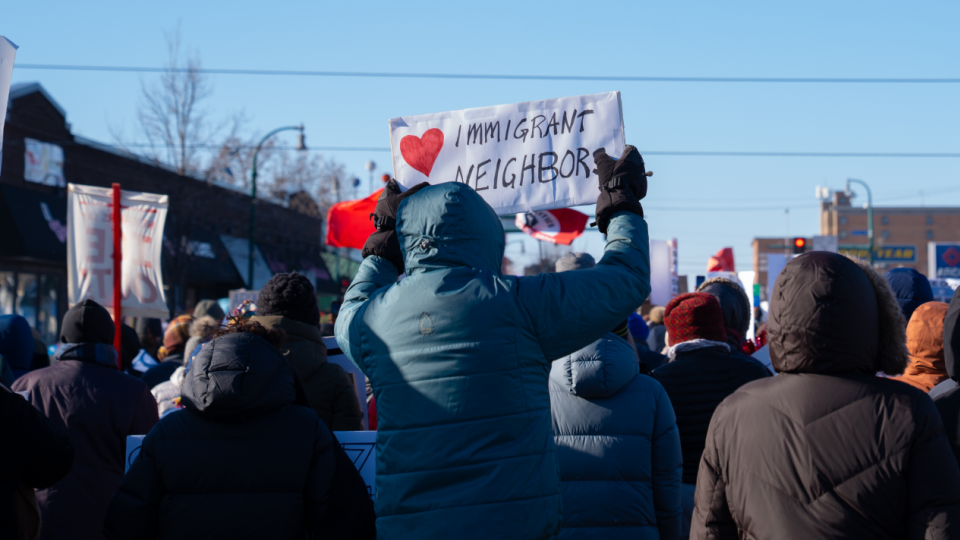
As I type, the U.S. Senate is debating a version of the Safeguarding American Voter Eligibility (SAVE) Act, a comprehensive and controversial package of voter eligibility restrictions that would drastically expand the federal government’s control over national elections (a responsibility constitutionally delegated to the states). While this bill is widely expected to fail in the Senate, the White House has previously signaled it may mandate these changes by Executive Order before the 2026 midterm elections — raising alarm bells for many advocates concerned about the increased potential for voter suppression and election interference. But there is another group that could effectively see their work shuttered as a result of the White House’s proposed voter restrictions: charitable nonprofits engaged in voter registration and education.
Among the changes included in the SAVE Act is a provision that would require prospective voters to provide proof of citizenship during registration, effectively disenfranchising millions of American citizens without such documentation readily available. Contrary to popular belief, a state-issued driver’s license is generally not accepted as proof of citizenship — instead, the SAVE Act would require prospective voters to present their birth certificate, passport, or equivalent document in-person at a government office to register to vote. Much has been written about the obstacles such a requirement would create in rural and working-class communities, where election offices are often far away and fewer prospective voters have a passport or easy access to their birth certificate. For decades, nonprofit voter registration programs that reach prospective voters in their communities have been instrumental in getting them to the polls. In-person identification requirements would effectively end these programs.
Why does it matter if nonprofits are no longer able to help Americans register to vote and participate in elections? One answer is that nonprofits are extremely good at it. According to research conducted by Nonprofit VOTE, American voters engaged by nonprofits vote at rates 10 percentage points higher than their peers, thanks in part to the trust and long-term relationships built between charitable organizations and the communities they serve. The difference is even greater when we look at younger voters, working-class voters, and voters of color: among these typically “low-propensity” demographics, turnout among voters engaged by nonprofits was 12-15 points higher than their peers.
The reason for this high level of success comes down to trust and access: according to research from Independent Sector, nonprofits enjoy the highest levels of public trust of any sector in U.S. society – significantly higher than local, state, and federal government. Most nonprofits also operate directly within their communities, delivering meals, providing health care, and building relationships with Americans that government often struggles to reach.
If these restrictions to voter access are passed into law (or directed by the White House after they are rejected by Congress), the United States stands to lose one of the most effective tools for boosting voter turnout in the specific communities our government has long struggled to engage. Less young people, people of color, and working-class Americans voting will have serious consequences for the effectiveness and responsiveness of our government. At a moment when government appears increasingly unable to come up with solutions that meet the needs of the communities it is required to serve, the last thing we should be doing is shutting more Americans out of the democratic process.
To halt this potentially catastrophic escalation of voter suppression, Independent Sector is calling on nonprofit and philanthropic leaders to contact their Senators and voice their concerns on the impacts of the SAVE Act on nonprofit voter engagement. To ensure nonprofit voices are heard before Senators vote, organizations can complete the advocacy form to urge their Senators to protect these critical programs.
Even before our country’s founding 250 years ago, charitable organizations and civil society groups helped Americans make their voices heard in the halls of power. That work is as important and relevant as ever. To equip nonprofits with knowledge and resources to register and engage voters locally, Independent Sector is teaming up with Nonprofit VOTE and Bolder Advocacy to launch Voices in Action. In the months leading up to the 2026 midterm elections, we’ll provide clear guidance on effective and compliant voter engagement practices, highlight key dates and deadlines, and offer strategic approaches to voter outreach. Stay tuned for more details on this work and mark May 5 on your calendar for our kickoff webinar.
Dr. Akilah Watkins
Dr. Akilah Watkins is president and CEO of Independent Sector.