Editor’s note: This piece first appeared in the November/December issue of The NonProfit Times.
As this tumultuous and transformative year comes to a close, I want to challenge my colleagues in the nonprofit sector to a thought experiment.
Imagine America without a nonprofit sector.
What would our country look like without the academic institutions, labor unions, churches, voting rights groups, veteran’s service organizations, charities, and other building blocks of civil society that bring us together as one people, indivisible, with liberty and justice for all?
For students of history, it is an impossible task. Too many of the achievements and inflection points that mark the evolution of our American experiment were created through the work of nonprofit institutions, from the abolitionist groups and churches that decried the existence of slavery, to the organized labor movement that brought us the eight hour workday and prohibitions on child labor, all the way to the civic heroes of the civil rights movement that continue to direct the work of social justice today. An America without these milestones is not an America most of us would call home.
Despite their indelible place in the American story, nonprofits are often taken for granted in our modern politics. In this era of political polarization, many nonprofits seek to stay outside of the realm of partisanship, preferring to let the public good that they provide speak for itself. But as divisive rhetoric and mischaracterizations of nonprofit work dominate the information space, it can often feel that the truth about the impact of our work is being drowned out by falsehoods. And worryingly, those falsehoods appear to be fueling a campaign of government weaponization against American nonprofits and philanthropies.
Many nonprofit leaders, workers, and volunteers are feeling ignored, disrespected, and even betrayed by the growing antagonism aimed at charitable work. Some may be asking themselves: if my society doesn’t appreciate my time, effort, and sacrifice, then why should I keep going?
In 1946’s beloved holiday classic “It’s a Wonderful Life,” civically minded George Bailey asks the same question. In a moment of bitterness and despair, he calls to the powers that be to remove him from the pages of history. Through his own absence, he reveals his impact, demonstrating how transformational one person can be when they dedicate their lives to doing good.
If we want our leaders to understand how essential we are to millions of Americans, the nonprofit sector needs a George Bailey moment. We must explain, in the starkest terms, what America will look like if the nonprofit sector were to disappear.
A Hole Ripped Through the Social Safety Net
According to the U.S. Census Bureau, nearly a quarter of Americans receive some sort of social safety net benefit to help them pay their bills and cover their basic needs. Many of these benefits are administered by or with the help of nonprofit institutions, such as summer meal programs, food banks, nonprofit hospitals and clinics, and shelter assistance. The disappearance of the roughly 50% of hospitals that qualify as nonprofits would leave many communities without even emergency health care, especially in rural and low-income areas. Mental health care, administered by nonprofit organizations in much of the country, would become a luxury service available only to those who can pay, potentially leading to higher rates of homelessness, incarceration, and death by suicide. Decades of underfunding and outsourcing of social program administration would leave much of the public sector ill-prepared to take over or replace the services provided by nonprofits, and the private sector would struggle to provide quality services to lower-income or geographically isolated communities while maintaining profitability. Without nonprofit institutions filling in these gaps in our social safety net, millions of Americans would be unable to access health care, hunger assistance, and housing.
Disappearing Culture
Much of our most-treasured American writers, artists, creators, and cultural mavericks were not considered ‘profitable’ until late in their careers or after their deaths. Even while media and studio consolidation has resulted in highly profitable streaming platforms like Netflix and YouTube, most local artists and creators can’t depend on the private sector to support their work. Instead, they rely on local, state, and national nonprofits to foster and fund their creative efforts. If those nonprofits were to disappear, the many local arts organizations, community theaters, and youth arts programs would disappear with them — erasing much of the artistic diversity and creativity that make up the vibrant tapestry that is American culture.
Jobs Lost, Inequality Grows
12.9 million Americans are employed by nonprofits. Two-thirds of that workforce is women. The elimination of the nonprofit sector would push nearly 10% of the American private workforce into unemployment, with a disproportionate impact on women, workers of color, and disabled workers. The elimination of nonprofit job training and education programs would rip away the ladder of opportunity for millions of low-income youth and young professionals, further entrenching economic inequality in America.
The Nightmare Made Real
In “It’s a Wonderful Life,” a guardian angel returns George Bailey to his life and community, and the nightmare of his nonexistence turns out to be nothing more than a cautionary tale. But for the millions of Americans that dedicate their lives to nonprofit service, the existential threats that face our sector are all too real — and a happy ending is not guaranteed.
The political winds in Washington are blowing against the nonprofit sector. The work of the so-called Department of Government Efficiency continues to impact nonprofit funding streams long after its closure, delaying, reducing, or eliminating federal grants and contracts and inspiring similar cuts in state and local governments. The executive branch continues to threaten to weaponize the Department of Justice and Internal Revenue Service against philanthropic organizations deemed politically unfavorable, which could hamstring philanthropy’s ability to pick up the slack left by federal funding retrenchment. Persistent inflation has left many organizations struggling to cover their operating costs, while public demand for nonprofit services will only continue to grow if health care premiums increase and lawmakers slash funding for social welfare programs like Medicaid and SNAP. As these pressures bear down on nonprofits, the current administration’s crackdown on freedom of expression, assembly, and association is chipping away at the cornerstones of American civil society and the foundations of an independent nonprofit sector.
How do we respond?
Let me be clear: There is no guardian angel coming to whisk us back to a better timeline.
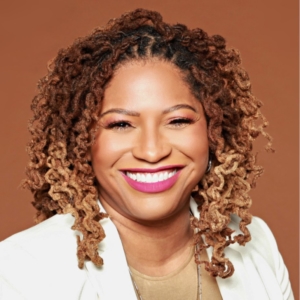
Dr. Akilah Watkins
Spoiler alert: We don’t need one.
We are our own guardian angels. We can tell our stories better than any Hollywood screenwriter.
Any good story requires stakes. And the stakes for American society if the nonprofit sector were to collapse are catastrophic and costly — especially for government officials who will need to pick up the pieces or face the consequences at the ballot box.
Like George Bailey, nonprofits have been taken for granted in American society as institutions that will always be there to catch us when we fall. As we move forward, we may find that effective advocacy will require hard conversations that force those in power to contemplate a reality without nonprofits — and, hopefully, persuade them to act before it’s too late.
Dr. Akilah Watkins is president and CEO of Independent Sector.