
Independent Sector and United for ALICE’s 2024 report, ALICE in the Nonprofit Workforce: A Study of Financial Hardship, found that more than 1 in 5 nonprofit employees in the United States struggled financially in 2022. The report rigorously analyzed publicly available data to understand the financial status of the country’s 13+ million nonprofit employees in greater detail than ever before.
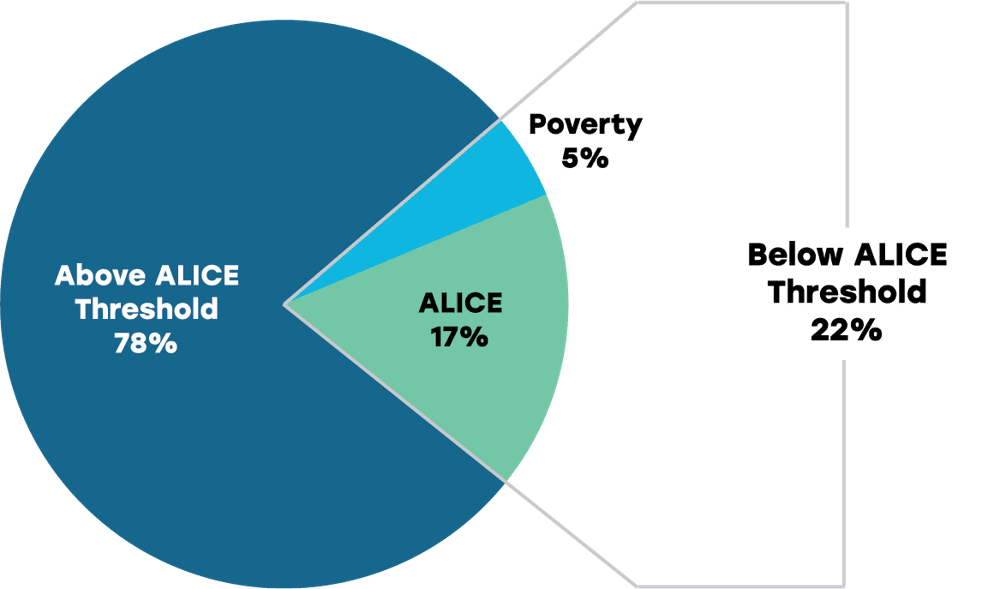
ALICE® refers to people who are asset limited, income constrained, and employed. ALICE nonprofit employees live in households that earn more than the federal poverty level, but less than what it costs to survive in the counties where they live. They can’t afford the basics, including housing, child care, food, transportation, health care, technology, and taxes.
In this fact sheet, United for ALICE and Independent Sector consider the broader benefits of lifting nonprofit sector workers up to the ALICE threshold. Investing in nonprofit workers who are struggling financially has a multiplier effect on local economies and positive impacts on government revenue and spending, with cascading benefits for communities.
In total, the monetary value of meeting basic needs for all nonprofit workers’ households in the U.S. would have yielded $100 billion in economic activity in 2023 – a 32% return on investment. Investing in nonprofit missions and nonprofit workers is an aligned approach to strengthening communities and helping people in need.

Learn More and Engage
- View the ALICE Nonprofit Workforce Dashboard, an interactive tool with state-level data on nonprofit workers’ financial status.
- Read ALICE in the Nonprofit Workforce, a first-of-its-kind study on financial hardship in the sector.
- Read a fact sheet on the connection between financial security, savings, and race/ethnicity among nonprofit workers.
- Mark October 13-16 on your calendar for Independent Sector’s National Summit 2026. We’ll be developing and sharing strategies to help the nonprofit workforce thrive.