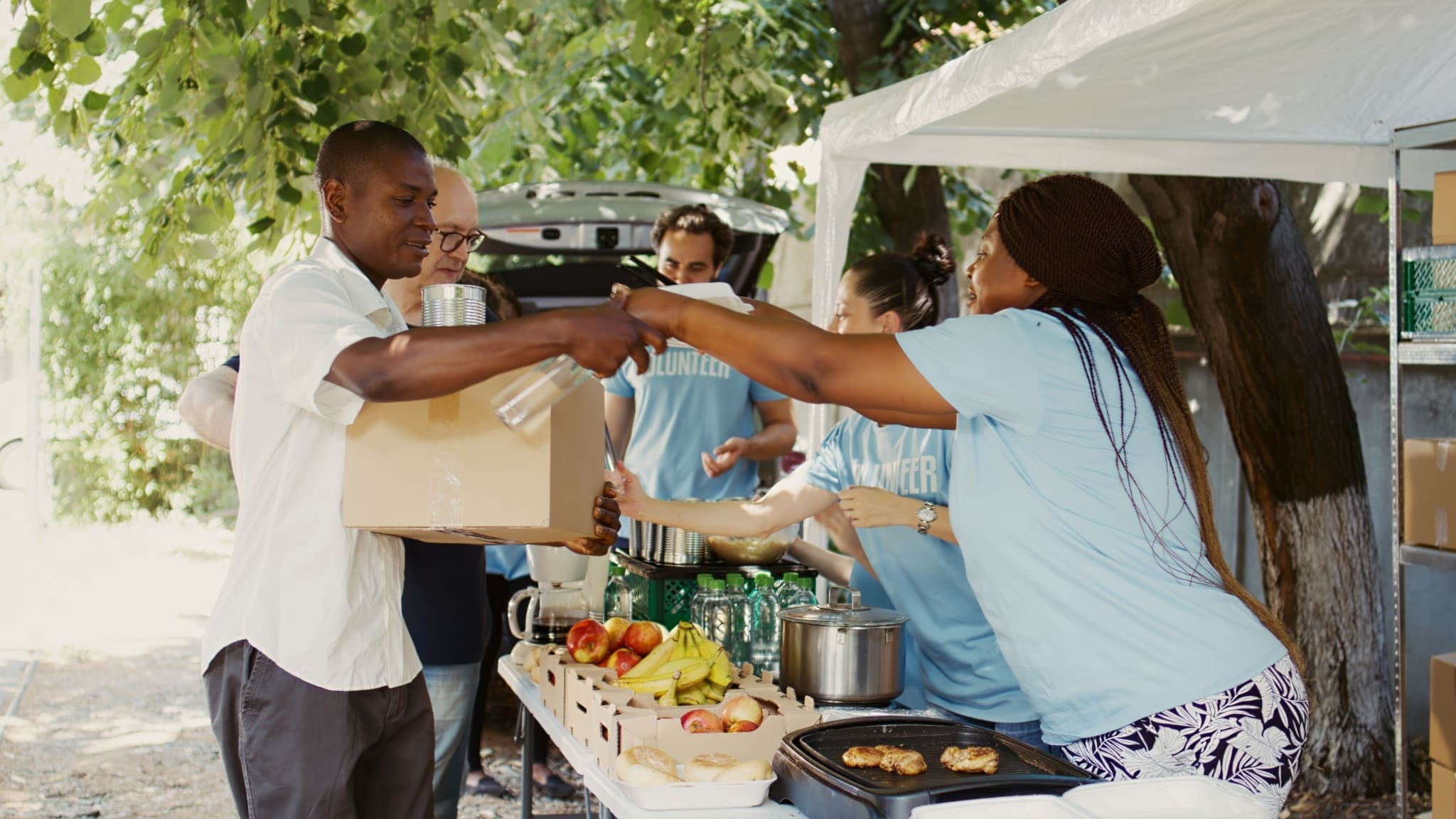
It started with one family bringing household supplies to an Afghan family that had resettled in their neighborhood. That small action 20 years ago bloomed into a nonprofit that has gathered volunteers every Saturday to replicate the first welcome.
So what happens when refugee resettlement comes to a halt as national policies change?
That question was front and center for the Welcome to America Project, one of the nonprofits participating in the Strategic Volunteer Engagement (SVE) Project in Arizona in 2025. Their signature welcome program – and the volunteers who powered it – were potentially no longer needed.

Adapting in Community
Welcome to America Project’s leaders reflected on their options. One possibility was to work with the families already in Phoenix who could use additional support in making it their home. There was an opportunity to adapt to the new reality, complementing existing efforts from other nonprofits without duplicating services.
That meant shifting the work of the 800 volunteers who partnered with the small paid staff. It was one thing to recruit volunteers primarily to collect, load, and deliver supplies each weekend. It was another to recruit volunteers who could offer a variety of skills, talents, and connections. Perhaps even more challenging was the prospect of inviting long-term volunteers, some of whom had been serving for more than 10 years, into new roles.
The programmatic change also meant adjusting volunteer engagement systems. There was a need to get to know more about current and prospective volunteers. The past system of simple online sign-ups and juggling multiple Google Sheets would not be sufficient anymore. The coaching, training, and peer sharing of the SVE Project would prove to be a valuable companion for this work.
Small Changes, Big Impact
Historically, the nonprofit’s volunteer strategies had been relaxed and informal, which worked well for the staff and the volunteers. Moving ahead, they realized that introducing additional structure would support everyone involved while still maintaining flexibility.
One of the first steps was to transition to a new volunteer management system. Moving the volunteers into the new system took time and education but ultimately streamlined processes. Instead of doing everything manually, the volunteer and resource manager, Damir Cato, can now send reminder and thank-you emails with the click of a button. He can track more types of volunteer activity and do so easily.
The new system also made it possible to track volunteer skills and interests. This new skills bank offers a way to provide support beyond the initial welcome with interpreters, tutors, or job counselors.
As roles expanded, there was an opportunity to educate and set clearer expectations with volunteers upfront. The team updated project descriptions with more details so volunteers could select the opportunities that matched their interests and abilities. Each group volunteer project also now includes a 15-minute orientation and conversation with updates about refugee programs and WTAP’s role. This gives volunteers a sense of the big picture and the need for their involvement.
These changes to volunteer engagement processes and systems may not seem significant, but each one led to improved outcomes. The new software created efficiencies for the staff and better communication with volunteers. The skills bank is making it possible to match community members and refugees to meet the refugees’ evolving goals. Clearer volunteer expectations are leading to improved volunteer placement and satisfaction. Ultimately, the changes to make volunteer engagement more strategic helped the organization adapt to a new environment and better meet the needs of its community and volunteers. The changes also contribute to the organization’s long-term capacity and resilience with stronger relationships and community involvement that are able to flex as needs fluctuate.
Volunteers as Partners Through Change
In times of crisis, some organizations might have seen volunteers as a liability and suspended their involvement. This happened frequently in the early stages of the COVID-19 pandemic.
However, the WTAP staff, who all started as volunteers, couldn’t help but see volunteers as an essential part of their workforce, even if service would have to change. Volunteers, after all, had a direct connection with refugees. They saw and heard firsthand what families needed. That insight was critical in identifying and closing gaps in service. Without volunteers, the knowledge and reach of the six paid staff would be limited. With 800 community volunteers, they could extend the mission and budget for greater impact.
Strategic Volunteer Engagement as an Untapped Resource
As Independent Sector has documented well, the nonprofit sector is experiencing significant challenges, even if they aren’t all as existential as WTAP’s. Many leaders are getting creative about how they can sustain their work.
Volunteers and strategic volunteer engagement may not be the first resource that nonprofit and philanthropic leaders consider in difficult times. However, experience shows what is possible when they do. As executive director Kevin Groman noted about participating in the SVE Project: “It was a perfect time for us due to the environment we are now operating in and has set us up well to be focused on this for the tumultuous years ahead.”
For more information on engaging volunteers well, visit Independent Sector’s resources.
Sue Carter Kahl, PhD is President of Sue Carter Kahl Consulting. Her work helps bridge the gap between research and practice in volunteer engagement.