Background
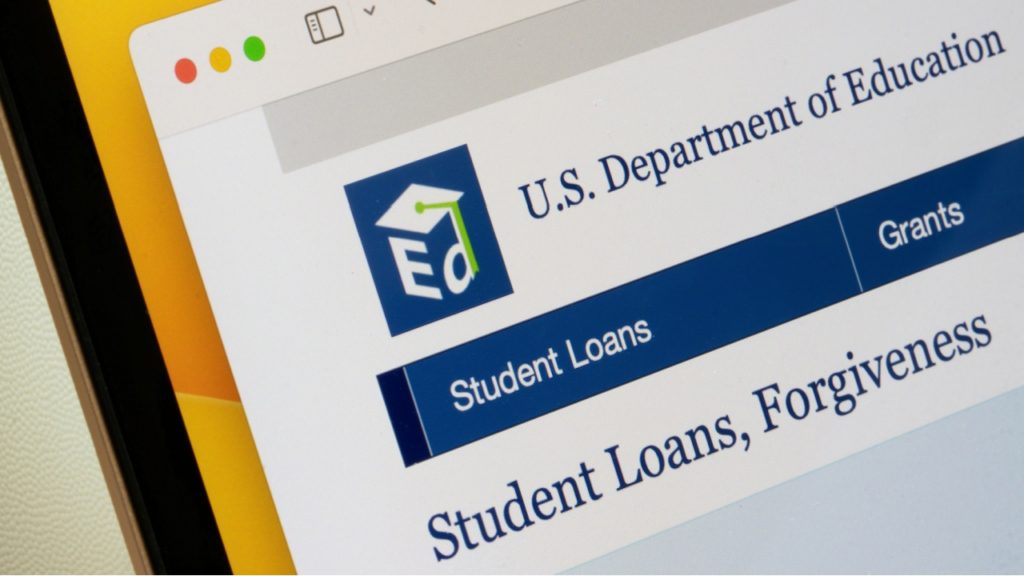
On August 18, 2025, the U.S. Department of Education (ED) published a Notice of Proposed Rulemaking (NPRM) proposing revisions to the Public Service Loan Forgiveness (PSLF) Program. The NPRM was issued in response to a March 2025 Executive Order instructing ED to revise eligibility criteria to exclude organizations with a “substantially illegal purpose” from qualifying as eligible employers under the program. Independent Sector submitted formal comments opposing the proposed rule on the grounds that the statute establishing PSLF clearly defines all 501(c)(3) nonprofit organizations as qualifying employers, and that ED lacks statutory authority to narrow that definition.
Despite widespread opposition from nonprofit, labor, and public-sector stakeholders, ED finalized the rule on October 30, 2025, with an effective date of July 1, 2026. The final rule grants ED new authority to exclude certain nonprofit employers it deems to have a “substantial illegal purpose,” raising significant questions about the scope of ED’s discretion, the rule’s legality, and its potential impact on nonprofit employees who rely on PSLF.
Which nonprofit employers are likely to be affected?
ED claims the change will affect very few employers — estimating fewer than 10 per year — and targets organizations involved in conduct like “supporting terrorism and aiding and abetting illegal immigration.” However, the language is vague and relies on a patchwork of inconsistent legal standards which opens the door to targeting organizations whose activities are lawful in the states in which they operate (for example, immigrant-services groups or providers of gender-affirming care) but who hold positions the current administration – or any future administration – disagrees with. The mere threat of disqualification could chill nonprofits from engaging in lawful mission-oriented activity and may hinder recruitment and retention of workers on a path to having their loans discharged under PSLF.
How does the final rule differ from the proposed rule?
The most significant change replaced references to employers “engaged in activities that have a substantial illegal purpose” to employers “engaged in activities such that [the employer] has a substantial illegal purpose,” a change intended to reflect that “organizations that engage in illegal activity do not automatically have a substantial illegal purpose under this final rule.” Although ED asserts in the regulatory preamble that ED will not disqualify organizations for “advocating for illegal immigrants or representing them in Federal immigration court” or based on “mere allegations or politically motivated lawsuits,” ED made no changes to the final rule in response to these and other concerns. Ultimately, the final rule preserves ED’s claim to expansive and nebulous authority to disqualify an organization for having a “substantial illegal purpose.”
What’s the practical impact on nonprofit employers?
The final rule does not go into effect until July 1, 2026, so ED cannot disqualify an employer under the new rule before that date. Critically, the new regulation does not change the law around what activities are illegal; instead, it creates new legal consequences for engaging in activity that is already illegal under federal or state law. The concern is that the vague regulation may be used to disqualify employers for conduct that is legal. Employers should continue to comply with federal and state law in engaging in their work. If an employer is concerned about whether their lawful activities might create risk under the new ED regulations, they should consult with legal counsel.
What’s the practical impact on nonprofit staff who rely on PSLF?
If an employer is disqualified, its employees’ loan payments made after the date of disqualification would no longer count toward the 120 qualifying payments needed for forgiveness. Payments made before July 1, 2026 (the date on which the rule goes into effect) will not be impacted. Unfortunately, under the new regulations, an employee whose employer is disqualified has no recourse through ED. Employees who find themselves in that position should consult with legal counsel.
What are the next steps and legal challenges?
Litigation began immediately. As of November 12, multiple lawsuits have been filed, with plaintiffs including: a coalition of unions, cities, and nonprofits, led by the National Council of Nonprofits; a coalition of attorneys general of 21 states and D.C., led by New York Attorney General Letitia James; and a coalition of 501(c)(3) nonprofits led by the Robert F. Kennedy Center for Justice and Human Rights. Plaintiffs in these cases are asking the courts to vacate the rule, in part on the grounds that the final rule violates the Administrative Procedure Act.
Bottom line for nonprofits
This is a consequential rule change. Although ED claims it safeguards taxpayers, many nonprofits, including Independent Sector, and more than 20 states see this for what it is: unnecessary and vague regulatory overreach that threatens the statutory promise that PSLF made to public-service workers. Litigation is already underway; outcomes will determine whether the rule takes effect as written, is delayed, or is struck down.
Travis Swanson is the Government Relations Manager at Independent Sector