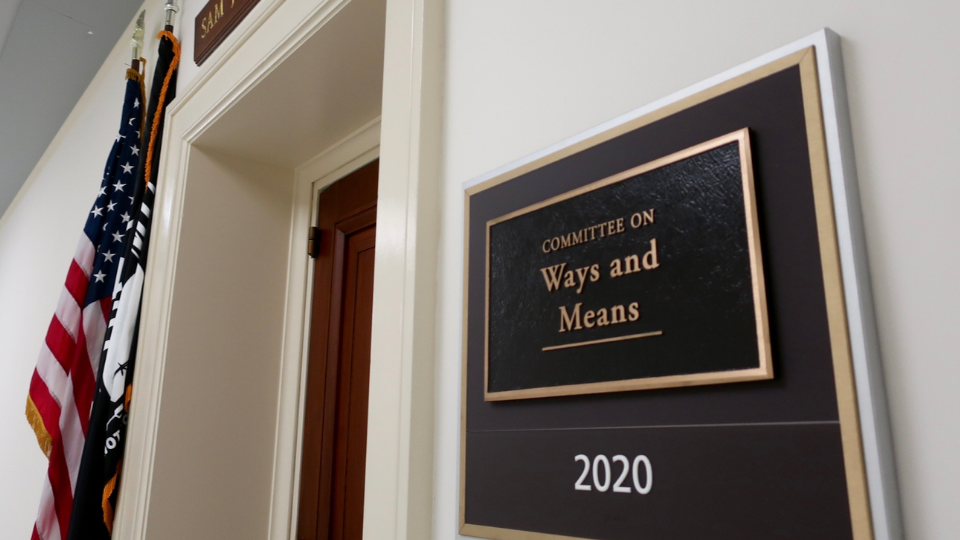
Earlier this week, the House Ways and Means Committee advanced four bills impacting nonprofit organizations. For those who have been following the Committee’s regular drumbeat of activity on nonprofit issues in recent months, the focus on foreign influence, increased disclosure, and fiscal sponsorship came as no surprise.
In advance of the markup, Independent Sector (IS) President and CEO Dr. Akilah Watkins wrote to committee leadership to share concerns about three of the bills, explaining how they could reduce charitable giving, increase legal risk, silence nonprofit voices, and create administrative burden without improving oversight. This letter — along with letters from other partner organizations — was entered into the official record during the Committee’s proceedings.
Chairman Jason Smith (R-MO) set the tone for the day in his opening comments, noting that the number of charities has grown considerably in the past 40 years, and contending that “too much of the tax-exempt sector operates in darkness, deliberately hiding in the shadows to avoid scrutiny.” For the next 4.5 hours, members of the Committee debated whether various pieces of legislation would achieve the Chairman’s aims of increasing transparency and preventing foreign influence on American elections. Tempers flared at times between the two parties, and even between legislators and the audience with Chairman Smith asking the “obnoxious” crowd for quiet at one point.
Democrats offered nine amendments during the proceedings, all of which were defeated or ruled nongermane on a strict party-line vote. Each of the four bills was advanced by the Committee, with all Republicans in support and all Democrats opposed. This failure to garner bipartisan support indicates the proposals would face major challenges in the Senate, with a 60-vote threshold generally required to advance. But even House passage for these bills is highly uncertain with a short legislative calendar, a long list of must-pass items, and a very thin Republican majority.
Regardless of whether these bills move any further in the 119th Congress, they are an important reflection of one group of legislators’ priorities for nonprofit sector oversight, priorities that were developed after extensive fact-finding and Committee hearings. Nonprofit sector advocates would be wise to consider them carefully, and to stay tuned for future developments. You can read the legislation and find the spiciest bits of the markup on the Ways and Means Committee website, or see our simplified summaries below.
Questions or comments? Please don’t hesitate to be in touch with Independent Sector’s government relations team.

H.R. 9772, the “Foreign Funding Transparency Act,” would require nonprofit organizations to include two new items on their annual Form 990 information return: 1) their aggregate total contributions received from foreign nationals, and 2) the amount received from citizens of China, Russia, Iran, and North Korea.
IS concerns: To comply with this requirement, nonprofits would need to ask every single donor for information about their citizenship. It is not difficult to imagine all the various situations in which this question might give a donor pause. Some nonprofits — like 501(c)(3) charities — already provide the IRS with detailed information about their significant contributors. This additional information would be of little use to the IRS, but it could be used by those who want to attack a particular organization for receiving foreign funding.
H.R. 9771, the “Stopping Foreign Influence in Elections Act of 2026,” would prohibit nonprofits from contributing to either 1) a political committee or 2) a 501(c)(4) social welfare organization for the two years following any contribution by a foreign national. The bill accomplishes this prohibition by taxing such contributions at 100%, then 200%, before suspending the organization’s tax-exempt status.
IS concerns: It is illegal for foreign nationals to influence our elections, and people who try to use nonprofits to skirt those rules should be stopped and punished. But this bill could prohibit a charity that receives a single foreign contribution from joining any lobbying coalition, which are frequently organized as 501(c)(4) organizations.
H.R. 9721, the “Fiscal Sponsorship Transparency Act of 2026,” requires fiscal sponsor organizations to publicly disclose detailed information about each sponsored project. It subjects the sponsoring organization and its leaders to increasing penalties for failing to exercise “discretion and control” over their projects. It exempts private foundations and donor-advised funds from these requirements.
IS concerns: There is no existing definition of fiscal sponsorship in the tax code, and this bill was unveiled less than a week before the Committee voted on it. Perhaps unsurprisingly, many experts on fiscal sponsorship believe that the definition needs some work!
H.R. 9722, the “Fair Treatment of Religious Organizations Act of 2026,” prohibits the IRS from considering whether a religious belief about marriage, sexuality, or gender identity is inconsistent with law or public policy.
IS note: The so-called “public policy doctrine” has a long history in the nonprofit sector but has not seen much attention from Congress in recent years. It is particularly interesting to see the Ways and Means Committee take action on legislation like this while the Trump administration is signaling that it may also soon advance rulemaking on the topic.
Ben Kershaw is Independent Sector’s director of public policy and government relations.