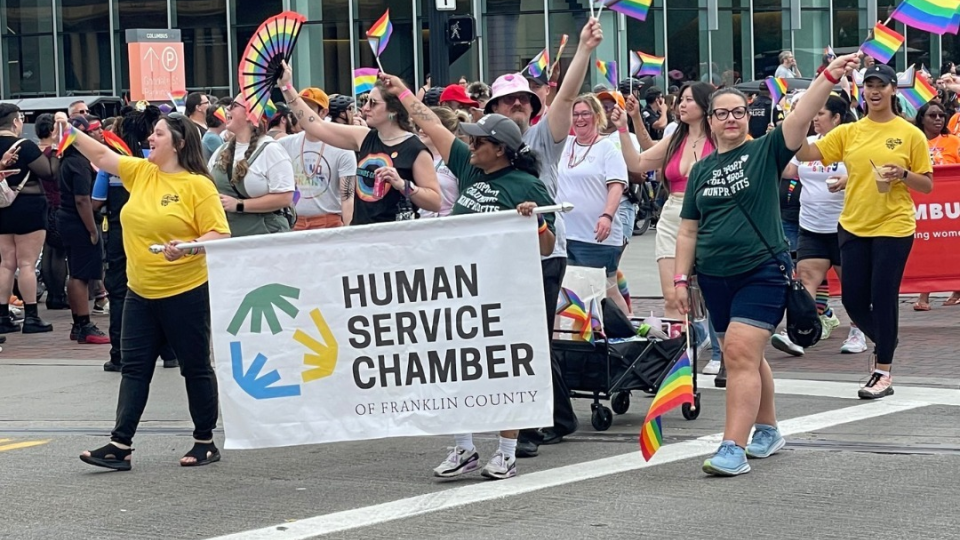
According to the Human Service Chamber of Franklin County, every act of human service unleashes the power of human potential. Based in Columbus, Ohio, the new Independent Sector member helps bring the health and human services sector together with one voice to better serve the overall Columbus Region. Executive Director Michael Corey, named ColumbusCEO’s Small Nonprofit CEO of the Year in 2022, and Deputy Director Bhumika Patel reflect on their mission and how they’re expanding the services they offer.
Nonprofit leaders actually founded the Human Service Chamber of Franklin County in 2010 to help nonprofits improve services to the people and communities they serve. How does your organization “help the helpers” in the Columbus region?
We try to be responsive to their needs. This requires being agile and attuned to what’s happening within subsectors of our sector, and within individual agencies. We need to be malleable to ensure sufficient value is being delivered to our members’ needs that can’t or aren’t being met elsewhere. That’s the niche we’ve tried to fill — trying to become part of the nonprofit infrastructure here so that we can help our members’ flourish so that our community can.
And our responsiveness to member needs is grounded in delivering high-quality and approachable services in (1) advocacy and insights at all levels of government; (2) professional services and capacity-building; and (3) improved connectivity to one another and to the community through excellent communications and high-value meetings.
Sometimes that manifests in big, sector-wide needs. In 2025, we’ve devoted a great deal of time to pushing our local community to pursue enormous and new sustained funding streams to the nonprofit sector to help offset losses forthcoming from federal funding shifts.
Sometimes that manifests in small, even fun projects that we can tackle. We’ve been producing apparel that says “Support Columbus Nonprofits” across the chest to help our community of 22,000 employees feel supported and united in these challenging times.
That’s why we’re grateful to be here — to help the helpers however we can on matters large and small.
Your #OneVoiceHSC series uses storytelling to help health and human service organization workers find their voice as they confront challenges and improve the lives of community residents. What sparked the storytelling series?
We were looking for other ways to highlight the meaningful work that our members do in our community every day, and our communications contractor was inspired by the Humans of New York series to start interviewing nonprofit workers. So the #OneVoiceHSC series is a way for us to elevate the voices and perspectives of nonprofit professionals in our community, and demonstrate why support for this sector is vital to our community’s overall well-being and prosperity.
For many agencies, the CEO or Executive Director is the usual spokesperson, but we wanted to go deeper and empower workers at different levels to share their “why.” There are many misconceptions about the work of nonprofits, and we saw this as an opportunity to bring light to thousands of nonprofit professionals working every day to help others and make our community better.
Independent Sector supports policy solutions and legislation on behalf of our members and sector. Your organization is focused on a number of policy areas as well. Describe them to us broadly, and how joining Independent Sector helps support your efforts.
The fun public policy challenge of an organization like ours is that, by definition, we care about what matters to our members. But we will never be experts like any of our members on any one issue. This is one of the reasons we have resisted the urge to develop a traditional public policy agenda. Instead, we care about what our members ask us to care about, within the parameters of advancing health and human services. Over the last decade, with a pandemic and two uniquely opposite administrations bookending that time, much of our public policy work has been to advocate for dollars to support nonprofit services, or to support the people who disproportionately need nonprofit services. So that broadly means supporting the policy areas that undergirds the social determinants of health.
And that has largely meant trying to support the aggregate needs of our members, without getting into the weeds on any issue ourselves. Our task instead is to ensure our members’ expertise is both elevated and supported.
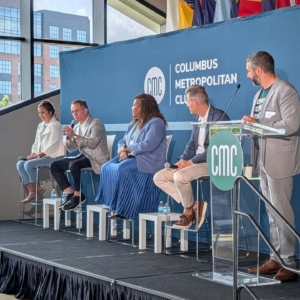
So we try to position ourselves at the nexus of policymakers and our members, and when necessary, we push against legislation or action that would be anathema to the work of our sector. There has, regrettably, been much more of that in 2025. In real-time, we’re working hard to delay the HUD Notice of Opportunity Funding (NOFO) that would overturn decades of bipartisan practice in housing people who have experienced homelessness. We’re doing that by circulating a sign-on letter that we will deliver to our Congressional delegation. The letter asserts, importantly, that this policy would affect not only our entire nonprofit community, but the entire Columbus Region. We are confident they will listen if we speak with one voice once again.
You recently announced that the Human Service Chamber of Franklin County is expanding and improving the professional services you offer. Tell us more.
We have been scaling up our professional services and capacity-building support to our members over the past several years. By surveying and consulting with members, we went from offering one-off webinars and passing along general guidance to now offering several workshops and webinars every month in addition to 1:1 support in the areas of legal, HR, finance, development, and communications, and more!
These types of services are needed to support the resilience and sustainability of the nonprofit sector as a whole. Our sector has faced underfunding and uncertain funding for years, which makes it challenging for agencies to invest in the critical back-office infrastructure essential for organizational health and service delivery. Our goal is to provide responsive, meaningful, and efficient support to the health and human services sector, so nonprofits have the tools, knowledge, and connections needed to remain resilient in the face of ever-changing demands.
There is always more we want to do to be responsive to our members’ needs. We have long wanted to invest in services to support nonprofit leadership development and board development, but we have not had the capacity to tackle those challenges yet. The services we currently offer still make a tremendous impact by lightening the load our members carry so they can focus on serving the community. We are grateful to make these services available to our members with the partnership and support of the City of Columbus and the Columbus Foundation.
What concerns do you have for your organization and the charitable sector as we continue to grapple with tough, challenging times?
We’re deeply concerned about the spectacular retreat of the federal government’s support of nonprofits, and the people nonprofits serve. We’re also worried about the rise of AI, the accelerating consequences of global warming, and of the distrust and despair undermining our systems. But one thing at a time.
The disappearance and/or weaponization of billions (or trillions) of dollars, the dismantling and/or weaponization of key federal agencies, the rhetorical and legal targeting of nonprofits and the people they serve, the downright dehumanization of people — it’s all deeply concerning, and underscores that our sector exists to protect and advance the health and humanity of everyone in our communities across the United States.
So our concern is that it’s going to be harder and harder to do that, as well and as quickly as that will need to get done, as the supply of resources is depleted and as the demand for such resources skyrockets.
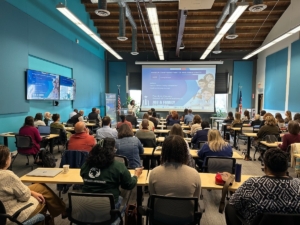
We have to be malleable once again. And that means looking for resources and solutions elsewhere, looking for impossibly efficient ways for our members to help the community in a time when government can’t be relied upon the way that it has been for decades, however imperfectly.
And the only way through is together, at the local level, looking for ways to get things done. We have to solve one problem at a time, and do whatever we can to stabilize the sector until less turbulent times come.
Better days are ahead, and our members will be the ones rebuilding the systems currently being dismantled after years of erosion. The systems weren’t ideal before, so we will rebuild them better than they ever were. But we have to hold on in the meantime, come what may. Our communities require it.
There are extraordinary people across our and every community, and they’re all working exceedingly hard to get us through this era in American life. The little wins along the way — getting someone housed, getting someone employed, getting someone cared for, getting someone reunited, naturalizing a new citizen — they will move the mountains we need to move in the end to make America the America our founders promised, with apologies for paraphrasing Langston Hughes. That’s the light at the end of this tunnel we are in.
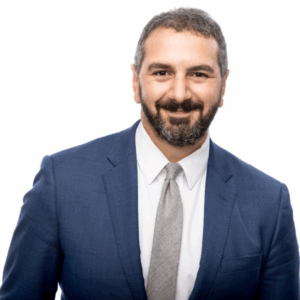
Michael Corey, executive director of the Human Service Chamber of Franklin County
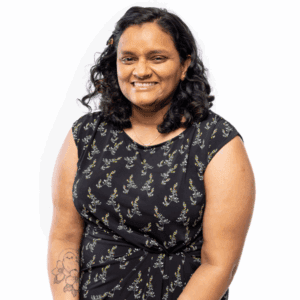
Bhumika Patel, deputy director of the Human Service Chamber of Franklin County
Learn about other Independent Sector members and becoming a member.